 By
By 
A well-designed yard is more than just grass around a home. With intention and a clear vision, your outdoor space becomes an extension of your living environment—a sanctuary that boosts curb appeal, improves property value, and offers a retreat from stress. Often, homeowners make piecemeal improvements without considering traffic flow, resulting in a disjointed landscape needing maintenance without achieving a polished look.
Beauty requires understanding how structural elements, living systems, and environmental factors interact. A successful outdoor space balances texture, scale, color, and function while respecting natural conditions. Viewing your yard as an integrated ecosystem allows for visual interest through each season. From the health of organisms beneath the turf to nighttime illumination, every detail contributes to the design. By focusing on site preparation, healthy plants, structural boundaries, hardscape longevity, and lighting, you can create an outdoor setting that remains visually stunning and functional for decades.
Mastering Groundwork: Preparing Healthy Soil and Defining Your Layout
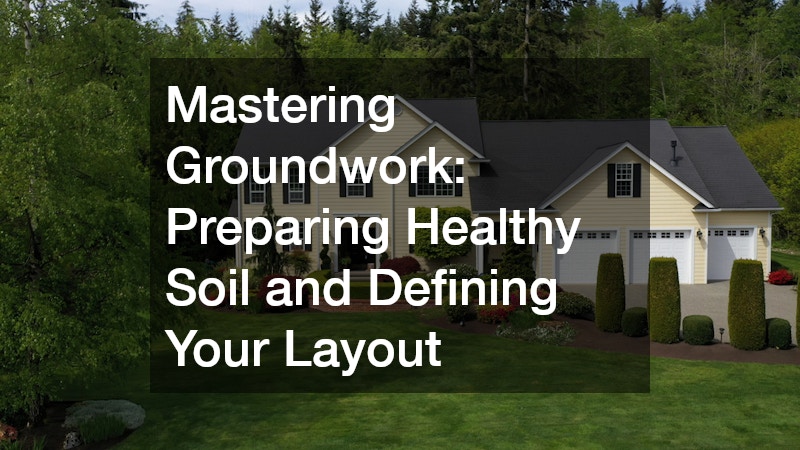
Before planting, establish the foundational structure of your property. A common mistake in design is rushing to decoration without analyzing site conditions or preparing underneath. A garden built on compacted dirt will struggle, causing weak foliage, plant deaths, and wasted investments.
Conduct a thorough site analysis at different times of the day and various weather conditions. Map natural light movement, note areas of intense sun or permanent shade, and observe water behavior during rainfall. Identify low spots with pooling water, steep slopes with erosion, and high-traffic zones where vegetation wears down. Establish visual focal points such as seating areas, water features, or frames for distant views to guide eye movement and garden bed placement.
Once mapped, focus on the soil. Healthy soil provides nutrients, root anchors, and moisture regulation. Clay soils can suffocate roots by retaining water, while sandy soils drain moisture and nutrients too quickly.
- Conducting Soil Audits: Test your ground for both pH levels and compaction. Most ornamental plants and turf varieties thrive in slightly acidic to neutral soil (pH 6.0 to 7.0). If your soil is dense subsoil stripped during original home construction, it must be remediated with rich organic matter.
- Amending Substrates: Spread a thick, even layer of quality topsoil and organic compost across proposed garden beds and low turf areas. Sourcing materials from established top soil providers ensures your ground receives weed-free, nutrient-rich media capable of retaining ideal moisture levels.
- Establishing Smooth Contour Lines: Grade your property so that water naturally drains away from your home’s foundation toward designated rain gardens or swales. Smooth out rough transitions to make future maintenance, such as mowing and edging, effortless.
- Executing Professional Base Work: While basic planting can easily be done by hand, complex grading, extensive bed shaping, and large-scale structural earth-moving require specialized heavy equipment. Partnering with a full-scope landscaping service ensures that initial grading, subsurface drainage installations, and bed positioning strictly adhere to local utility codes and municipal water run-off regulations.
Proper groundwork creates an optimal environment where root systems can expand without resistance. Taking the time to establish proper grading and rich soil biology at the start eliminates the majority of plant health issues that typically plague residential properties years later.
Cultivating Vibrant Turf and Protecting Plant Beds

With a healthy, well-graded foundation in place, the next phase focuses on establishing rich green surfaces and protecting your cultivated plant beds from environmental stress. Turf grass acts as the visual canvas of your property, providing clean, open spaces that contrast beautifully against dense foliage, stone walls, and colorful flowering borders. However, achieving a lush, deep-green lawn that resists heat and heavy foot traffic takes far more than occasionally broadcasting off-the-shelf seed mixtures.
Choosing the correct turf species depends entirely on your local climate zone and the microclimates present across your yard. Cool-season grasses like Kentucky bluegrass and tall fescue thrive in northern regions with warm summers and cold winters, whereas warm-season species like Bermuda, Zoysia, and St. Augustine excel in heat and drought conditions. Attempting to grow a sun-loving grass species beneath a dense canopy of shade trees results in thin, pale blades and persistent weed infestations. Matching the right seed blend to specific light conditions is the first step toward long-term turf success.
- Precision Turf Establishment: Broadcast seeding by hand often results in uneven distribution, leaving bare patches where weeds rapidly take root. Utilizing specialized lawn seeding companies allows for precise techniques like slit-seeding or hydroseeding, which push seeds directly into the soil at uniform depths to maximize germination rates and produce a dense, carpet-like lawn.
- Nutrient and Aeration Cycles: Core aeration should be performed annually to relieve soil compaction, allowing oxygen, water, and essential nutrients to penetrate deep into the root zone of your established grass.
- Moisture Retention and Weed Suppression: In planting beds, exposed soil rapidly loses moisture to evaporation and provides an open landing pad for windblown weed seeds. Applying a uniform 2- to 3-inch layer of organic mulch protects bare ground, moderates soil temperatures during summer heatwaves, and breaks down over time to enrich the soil.
- Efficient Bulk Material Application: Spreading cubic yards of heavy organic material across sprawling property borders is labor-intensive and time-consuming. Utilizing dedicated mulch services guarantees that high-grade, double-shredded bark or hardwood is evenly distributed without smothering plant crowns or damaging delicate root systems.
Managing the contrast between crisp, healthy turf and well-maintained garden beds brings immediate structural organization to your yard. The clean line where a lush lawn meets a freshly mulched planting bed is one of the simplest yet most striking design features any property can possess.
Framing the Canopy and Securing Elevated Hardscapes
A truly immersive outdoor space incorporates dynamic height variation, drawing the eye upward toward graceful tree canopies while keeping multi-level hardscapes safe and structural. High-impact landscape design utilizes vertical dimension to create a sense of enclosure and privacy, turning open yards into cozy, room-like outdoor environments. Mature trees serve as the majestic structural pillars of this vertical space, but without proper care and structural framing, they can cast excessive shade, drop hazardous deadwood, or visually overwhelm the rest of the property.
Managing mature trees requires balancing light penetration with structural aesthetics. Raising the crown—the process of removing lower limbs—opens up sightlines across the property and allows filtered sunlight to reach the lawn and flower beds beneath. Pruning also accentuates the natural silhouette of specimen trees, transforming them into architectural focal points that shine in every season, even during winter when leaves have fallen.
- Tree Canopy Care and Safety: Removing large, dead, or diseased limbs eliminates dangerous falling hazards during severe storms while improving air circulation through the upper branches. Professional tree services possess the specialized climbing equipment, rigging tools, and arboricultural expertise required to safely shape large trees, remove structural hazards, and preserve the long-term health of your property’s canopy.
- Visual Balance in Canopy Design: Ensure that tree removal and heavy pruning are done with long-term symmetry in mind. Over-pruning can stress a tree, while strategic cuts encourage healthy growth patterns and beautiful branch distribution.
- Defining Multi-Level Transitions: When properties feature changes in elevation, structural steps, retaining walls, and raised patios become necessary. These elevated hardscapes break up flat topography and create functional terraces for dining, lounging, or gardening.
- Integrating Modern Safety Accents: Elevated stone decks, steep stairways, and high retaining walls require durable, attractive barriers to prevent falls. Partnering with an experienced metal railing contractor allows you to install custom-crafted steel, wrought iron, or sleek aluminum railings that meet safety building codes while adding an elegant, modern framing line to your hardscape design.
By taking control of both overhead branch structures and the boundaries of elevated stone surfaces, you establish a safe, balanced framework across the vertical planes of your yard. This sense of vertical order elevates simple backyards into sophisticated, multi-layered environments.
Protecting Hardscape Surfaces and Automating Hydration
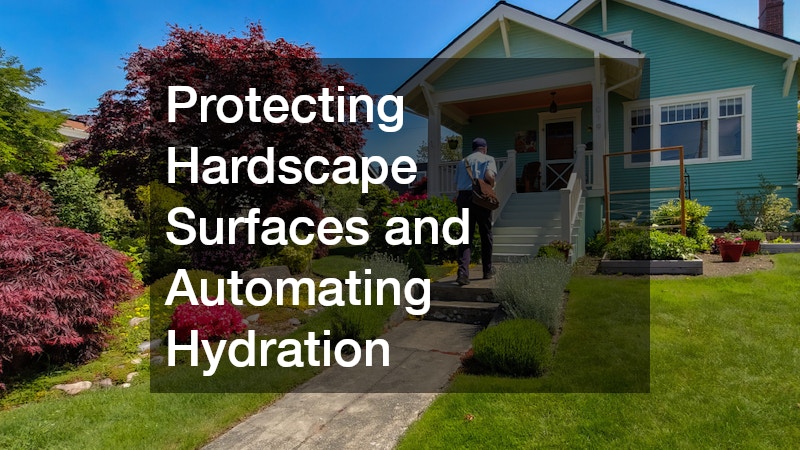
Hardscapes—including paver patios, stone walkways, retaining walls, and outdoor kitchens—form the functional skeleton of modern outdoor design. They define where people gather, walk, and relax, bringing structural permanence to spaces filled with constantly growing plants. However, hardscapes are exposed to harsh weather year-round. Rain, intense ultraviolet radiation, freeze-thaw cycles, and organic staining from fallen leaves can rapidly degrade unsealed stone and concrete, causing high-end installations to look dull, weathered, and cracked over time.
Preserving the rich color and structural integrity of paver systems requires proactive surface care. Concrete pavers are porous materials that absorb liquid spills, motor oil, and rainwater. In cold climates, trapped moisture expands as it freezes, causing microscopic fractures that eventually destroy the paver surface and pop joint sand out of place.
- Surface Cleaning and Restoration: Deep-cleaning paver surfaces with high-pressure washing removes ground-in dirt, moss, algae, and weed growth from joint lines, restoring the original luster of the stone.
- Joint Stabilization and Sealing: Applying specialized joint-stabilizing sand followed by penetrating sealers locks sand particles in place, prevents weed seeds from taking root between stones, and shields pavers against UV fading and oil stains. Engaging a specialized paver sealing company ensures that high-grade, breathable sealers are applied uniformly without creating cloudy surfaces or slippery textures.
- Targeted Plant Irrigation: Once hardscapes are protected, maintaining the living plants around them requires consistent moisture. Hand-watering with hoses is inefficient, wastes water through surface evaporation, and often leads to over-watering in some areas while under-watering others.
- Precision Hydration Systems: Installing an automated subsurface or drip watering system delivers precise quantities of water directly to root zones early in the morning, drastically reducing water waste. Custom irrigation installs equipped with intelligent rain sensors and multi-zone controllers ensure that delicate flower beds, turf areas, and potted plants receive tailored hydration schedules automatically based on real-time local weather data.
Investing in hardscape sealing and automated watering systems safeguards your physical and financial investments. Protecting hard surfaces from atmospheric wear while automating plant care preserves your property’s beauty with minimal manual labor required.
Designing Atmospheric Nighttime Illumination and Safe Power Lines
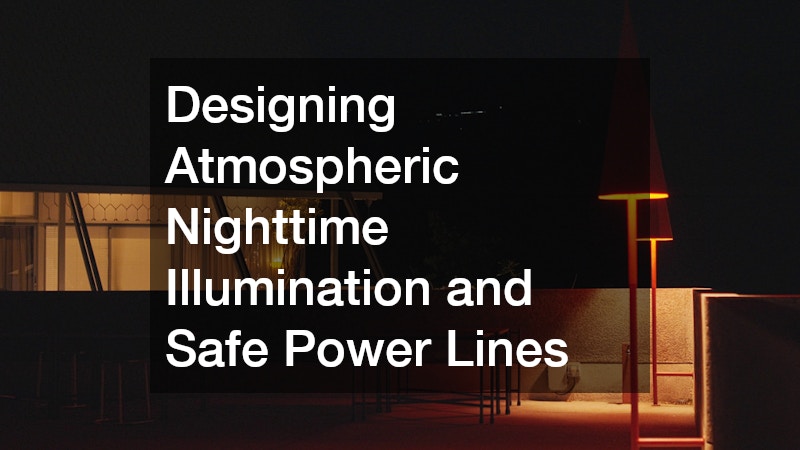
A truly exceptional landscape design does not disappear when the sun sets. Strategic exterior lighting transforms your yard after dark, revealing a completely different, atmospheric visual personality. Thoughtfully illuminated trees, paths, and structural walls create a dramatic outdoor experience that extends your home’s usable living space well into the evening, while simultaneously improving property security and foot-traffic safety.
The key to successful nighttime illumination lies in subtlety, contrast, and layering. Avoid harsh, overpowering floodlights that blind guests and wash out natural colors. Instead, focus on low-voltage LED fixtures that cast warm, soft light onto specific architectural and natural features across the property. Warm color temperatures—typically between 2700K and 3000K—replicate natural candlelight, creating a welcoming, high-end resort aesthetic.
- Architectural Uplighting: Position low-profile directional spotlights at the bases of major specimen trees, stone pillars, or textured home facades. Directing light upward highlights intricate bark textures, leaf canopies, and stone craftsmanship, creating striking shadows and depth.
- Pathway and Boundary Safety: Install shielded path lights along walkways, driveways, and garden borders. Path fixtures should cast light downward onto the walking surface rather than outward into eyes, guiding foot traffic smoothly without producing unpleasant glare.
- Professional Lighting Design: Creating a balanced nighttime layout requires careful fixture choice, beam-angle calculation, and voltage-drop balancing across long wire runs. Hiring specialized landscape lighting services guarantees that low-voltage transformers, durable brass or copper fixtures, and automated smart-timer controls are integrated seamlessly into your existing garden design.
- Infrastructure and Heavy Power Needs: Low-voltage lighting systems require reliable high-voltage power sources at the primary transformer. Additionally, modern outdoor living spaces often feature high-draw amenities like outdoor kitchen appliances, heavy-duty water pumps, electric heaters, and hot tubs.
- Safe Code-Compliant Wiring: Attempting to power outdoor features with temporary extension cords creates dangerous trip hazards and severe fire risks. Retaining licensed professionals for electrical services guarantees that weather-rated GFCI outlets, underground rigid conduits, dedicated breaker subpanels, and hidden feed lines are installed in strict compliance with national electrical safety codes.
Integrating low-voltage aesthetic lighting with safe, high-capacity underground electrical infrastructure ensures that your yard remains functional, secure, and visually breathtaking long after dark.
Creating a yard with striking, lasting beauty blends artistic vision and practical engineering. By viewing your outdoor space as an interconnected whole, you can transform a lawn into a dynamic sanctuary. Begin by building rich soil and proper drainage, establishing dense turf and protected planting beds, shaping tree canopies, securing hardscape surfaces, and illuminating the composition with subtle lighting.
When every element—from soil nutrients to the glow of an uplit tree canopy—is addressed with care, your property comes alive. Evaluate your yard’s terrain, light patterns, and architecture. Prioritize foundational work before decorative details, and collaborate with specialists for complex tasks. With thoughtful planning and quality materials, you can create a stunning outdoor environment that enhances your lifestyle and grows more beautiful each year.